How Do You Know Your Bone Is Broken
How to tell if a bone is fractured or bruised
- Signs of a bone fracture
- Common cleaved bones in children
- Different types of fractures
- What is a bone bruise?
- How to treat a broken or hobbling bone
- Healing process of a broken bone
Signs of a bone fracture
Cleaved bones are most common in the upper and lower extremities (limbs). The upper extremities include the arms, elbows, wrists and fingers and the lower extremities include the legs, knees, ankles and anxiety. Tendon and ligament injuries (sprains and strains) can occur in these areas too, but do non occur every bit frequently in children.
If your kid has an extremity injury, at that place are a few ways to determine if they need to be seen immediately or if it can wait until later. Some symptoms may seem obvious; others may not. The general signs of a fracture are:
- Pain
- Bruising
- Swelling with tenderness over the area involved
If the child or adult heard a snap or grinding sound when the injury occurred, it is more probable to exist a fracture, but not necessarily.
Regardless of when they need to be seen, our same day orthopaedic clinic is open up Monday through Fri from eight a.m. to 4 p.m. and tin can be reached by calling (804) 828-2467.
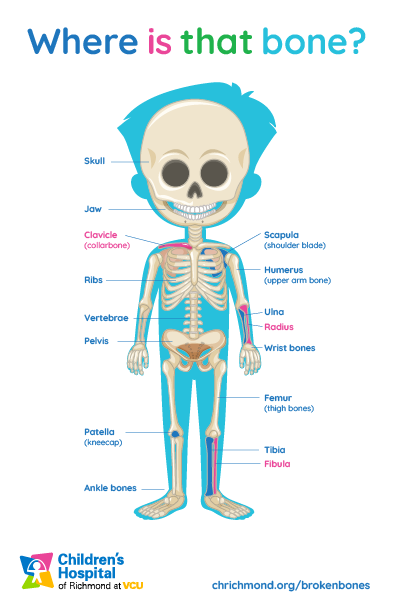 Common broken bones in children
- Ankles: This typically occurs from a twist or fall from an activeness like skateboarding, running, riding on a scooter or rollerblading.
- Elbows: A common injury making upwards about 10% of fractures in kids, elbow fractures happen when a bone breaks at or near the elbow joint and can happen in i or more than of the three bones that make up the elbow.
- Forearms: Forearm fractures are the most common type of fractures in children. A fracture tin occur anywhere on the 2 bones that make up the forearm (called the radius and the ulna)
- Femur fracture: Your femur bone is the largest bone in the body and connects the pelvis together to form the hip. Virtually commonly femur fractures occur close to the knee through the growth plate since it is weaker than the bone.
- Tibial shaft fracture: The tibial shaft area refers the shin bone and the smaller fibula bone that make upwards the major bones in the lower leg. Most ordinarily, the tibia breaks in the middle of the bone (which is called the tibial shaft), but the shin bone tin can face other types of fractures depending on the force of the injury. Fractures also occur frequently in kids in the growth plates at the finish of the tibia that is part of the talocrural joint.
What are the different types of fractures?
- Open vs airtight fractures: Bone fractures are classified as either open or closed. A closed fracture happens when the bone is broken only hasn't come out of the peel. An open up fracture, also known as a compound fracture, is a relatively rare occurrence in children and happens when the bone breaks through the peel.
- Non-displaced fracture: Occurs where in that location is a crack in the os, but the bone hasn't shifted out of identify. Stress fractures (that occur when tiny cracks form in the bone) or buckle fractures (when ane side of the bone buckles upon itself) are 2 common non-displaced fractures. They tin can typically exist treated with a caryatid, splint or cast.
- Displaced fractures: This happens when a bone is broken, and it moves out of position. Displaced fractures can exist broken into a few types:
- Greenstick: When one side of the bone is cleaved, causing the other to bend like a broken tree branch.
- Rotated: When the os spun when it broke
- Angulated: When the ends of the broken os are angled to each other
- Translated: When the bones have shifted out of alignment
- Growth plate fracture: Growth plates refer to the softer pieces of developing cartilage tissue, which grade the length and shape of the bone. Left untreated, a growth plate fracture tin lead to issues with growth and os development. Since your child is still growing, the growth plates tin can be very prone to injury and then injury prevention during sports and playground activities is especially of import.
What is a bone bruise?
Bone bruises are less severe than bone fractures. This happens when the bone gets several small cracks with blood and fluid building among the cracks right under the skin. The about common areas for bone bruising occur are the knee and ankle.
If your child is experiencing severe pain, swollen or tender area near the injury, bloated or stiff joints nigh the injury or changes in skin color over the injury, information technology might be hobbling.
We recommend that you seek medical attention and so we can check the injured area and determine whether the bone is broken or bruised.
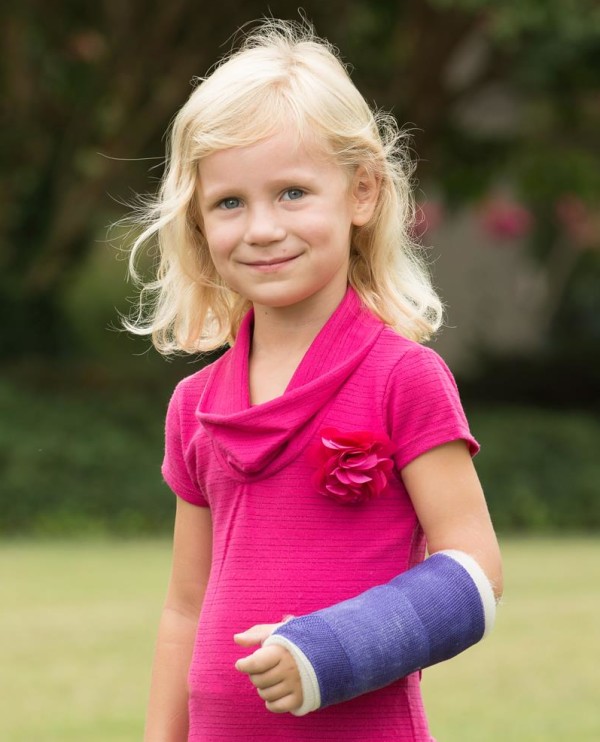
Treating a broken or hobbling os: When to seek care and how to aid
Our walk-in orthaepedic clinic tin see your child if you suspect your child has a bruised or cleaved bone.
A child should be seen ASAP if:
- The extremity has a deformity (may look like a bump or alter in shape effectually the bone).
- At that place is a break in the skin and bone is showing.
- The kid cannot behave weight on or apply the extremity 15 minutes afterwards the injury occurred
- The kid'south hurting is non being controlled and the child is crying with residual, peak, ice and over-the-counter pain medication.
If ANY of these things are true seek medical attention immediately and exercise not allow the child to eat in example surgery or a process to marshal the fracture is needed. If in that location is severe bleeding, a break in the skin or a question of a spinal injury, call for emergency intendance.
If the extremity appears deformed, wear should be carefully removed or cut from the injured limb and the limb should be supported with a makeshift splint. A makeshift splint tin be made with some soft padding around the injury and something firm extending beyond the joints to a higher place and below the injury. The American Academy of Pediatrics recommends wrapping a small board, cardboard or folded up newspapers with an rubberband bandage or tape to make a temporary splint.
If all of the above things are negative and the extremity is not very swollen, and then the child tin can potentially wait to see a doc in an outpatient dispensary to have an test and get x-rays if needed. To reduce swelling, you can employ cold compresses or ice wrapped in cloth, a towel or other fabric, just exercise non apply water ice directly to the skin every bit this could cause frostbite (freezing of the skin and underlying tissues).
Most broken bones volition be recognized immediately or inside a twenty-four hours if a child is still not able to apply the extremity as usual. If afterwards a day this is the case, the kid should be seen in an outpatient clinic, either with the primary care doctor or an orthopaedic surgeon. Although many children are non able to tell us exactly where this type of injury is, they ordinarily will protect that extremity or cry when it is touched, which is some other sign that a kid may need medical care.
Sometimes 10-rays will not evidence a fracture if it is through the growth plate and the child will still be treated for a fracture if at that place is enough suspicion. Growth plates are cartilage and do non testify upward on ten-ray. Therefore a fracture through the growth plate that has not moved or shifted will not show on the ten-ray. These are minor fractures, merely still may demand to be immobilized for symptoms and to protect the child from doing more harm.
To learn more than nearly ankle, elbow, femur, forearm or growth plate injuries and how each are treated, see the "I Bankrupt My…" section of the Pediatric Orthopaedic Gild of Due north America website.
How long does it accept to heal a cleaved os?
Depending on the type of os and the severity of the break, it tin can take about 6 weeks or more than until your child can render to normal activity. For instance, bigger bones will have longer to heal than smaller bones.
Our orthaepedic specialists will walk you through the what the healing process will be similar, how long information technology will take for the broken os to heal and answer whatever other questions you have.
A broken os can be scary, just with proper intendance and treatment, they will heal and be okay.
Disclosure: This article is solely dealing with extremity injuries and non multiple traumas including possible abdominal or caput injuries. If any of those are suspected, seek medical attention immediately. Practise non motility the kid if there is suspected neck or spine injury.
Originally published in April 2016
Updated July 2020
Source: https://www.chrichmond.org/blog/broken-bones-how-do-you-know-when-its-more-than-just-a-bump-or-bruise
Belum ada Komentar untuk "How Do You Know Your Bone Is Broken"
Posting Komentar