Improv Nation How We Made a Great American Art
"...the most distinctive, and perhaps the virtually impressive, feature of American scenery is its wilderness."
ane of 9

"The painter of American scenery has, indeed, privileges superior to whatsoever other. All nature here is new to fine art."
2 of nine
"Of course, it is well to become away and see the works of the old masters, only Americans... must strike out for themselves, and only past doing this will we create a great and distinctly American fine art."
3 of ix

"Maybe...humanity to you has been reduced to the sterility of the line, the cube, the circle, and the foursquare; devoid of all feeling, cold and highly esoteric. If this is so, I tin well understand why you cannot portray the true America. It is because y'all have lost all feeling for man."
iv of 9

"I feel sometimes an American artist must feel, like a baseball game thespian or something - a member of a squad writing American history."
5 of 9

"One tin can not be an American by going nigh saying that one is an American. It is necessary to feel America, like America, beloved America and and so work."
six of 9

"I had to get to France to appreciate Iowa."
7 of 9
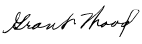
"I have a definite feeling for the Westward, the vast horizontality of the country, for instance...I have always been very impressed with the plastic qualities of American Indian fine art. The Indians take the true painter's approach in their chapters to get hold of appropriate images, and in their understanding of what constitutes painterly subject-affair. Their colour is essentially Western, their vision has the basic universality of all real fine art."
viii of ix

"The idea of an isolated American painting, so popular in this country during the thirties, seems absurd to me, simply as the idea of a purely American mathematics or physics would seem cool... An American is an American and his painting would naturally be qualified by the fact, whether he wills or non. Merely the bones problems of gimmicky painting are independent of any one country."
nine of ix
Summary of American Art
The United states of america' rich artistic history stretches from the earliest indigenous cultures to the more recent globalization of contemporary art. Centuries before the beginning European colonizers, Native American peoples had crafted ritual and commonsensical objects that reflected the natural environs and their beliefs. After the inflow of Europeans, artists looked to European tendencies in portraiture and landscape painting to craft representations of the new land, but it was not until the centre of the 19thursday century with the Hudson River Schoolhouse that American artists were considered to have launched a cohesive motion. Through the early 20th century, artists still took cues from European avant-garde groups only increasingly focused on the denizens of American urban centers and the more rural Midwest. After Globe State of war II, the artists that comprised the Abstract Expressionist movement institute international fame and notoriety, and for the first time, American creative influence moved away, and later Minimalism and Popular Art profoundly impacted the art world. Afterwards, with various global art centers and international connections, it is now more than hard to indicate to a specific American art trend, although i can nevertheless chart the influence of American artists in the global art sphere.
Key Ideas & Accomplishments
- While not originally recognized by the European colonizers, the creative creations of the ethnic Native American tribes were varied and long held. Abounding in various media and styles, Native American art encompassed the decorative, utilitarian, and ritualistic. Incorporating European styles and materials in the 19th century, Native American artists transformed traditional subjects and processes to tell their stories and continue to do so today.
- Every bit the United states' territory grew through the 19th century due to the looting of country, both painting and photography propelled manifest destiny's ideas of American exceptionalism and romantic notions of national identity. Large landscape paintings depicting the American Westward captured the sublimity of the natural mural, and photography in particular was instrumental in some cases in the creation of National Parks.
- For many art historians, the designation "American Art" usually concluded at Earth War II. After the international recognition of Abstract Expressionism, the art earth became increasingly globalized and lengthened, with styles and trends proficient in all corners of the world, but recent scholarship has focused on the transnational dialogues that are occurring now and tracing those back to create a richer understanding of the art of the United States.
Overview of American Art

"What constitutes American painting?... things may be in America, merely information technology's what is in the creative person that counts. What exercise we call 'American' outside of painting? Inventiveness, restlessness, speed, change.." said the innovative Arthur Dove. Here is your guide to the innovations in the arts made past Americans over the final 400 years.
Exercise Not Miss
-

A trend among New York painters of the late 1940s and '50s, all of whom were committed to an expressive art of profound emotion and universal themes. The move embraced the gestural abstraction of Willem de Kooning and Jackson Pollock, and the colour field painting of Mark Rothko and others. Information technology blended elements of Surrealism and abstruse art in an effort to create a new fashion fitted to the postwar mood of anxiety and trauma.
-

British artists of the 1950s were the first to make popular civilisation the ascendant subject of their art, and this idea became an international phenomenon in the 1960s. Simply the Popular art motility is most associated with New York, and artists such as Andy Warhol, who broke with the individual concerns of the Abstract Expressionists, and turned to themes which touched on public life and mass order.
-

Modern photography refers to a range of approaches from Direct Photography, New Vision photography, Dada and Surrealist photography, and subsequently abstract tendencies.
-

Modern Art is a flow of art making that promoted the new and industrial world, free from derivation and historical references. And for the new to be possible, quondam ideas about art were frequently birthday abased, or deconstructed.


The Important Artists and Works of American Art

A Wild Scene (1831-32)
This dramatic landscape exemplifies the work of the Hudson River School. A stunning vista of rocky outcrops and precipitous mountains opens upon a waterfall, in the eye correct, breaking into a luminous pool that flows into the ocean on the left. A craggy ancient tree frames the right border, its twisted limbs curving vertically toward the darkly portentous heaven. Native American figures, dressed in animal hides and armed with bows, occupy the lower third of the canvas, ane outlined against the pinkish and blue patch of sky on the left, the others located below the two prominent trees. Every bit art historians Elizabeth Mankin Kornhauser and Tim Baring wrote, the work is "a fine essay in the sublime: the rough, uncultivated landscape and dark, rolling clouds...convincingly represents an untamed wilderness." Precise detail reflects the influence of Naturalism, while what the creative person described as its "flashing chiaroscuro and a spirit of move pervading the scene, as though nature was just waking from chaos," reflects a Romanticist inspiration.
Art historian Carl Pfluger wrote that Cole "virtually invented a new style of mural, specializing in views of the wilderness." The creative person described the painting as "a vision of the earliest form of club, the 'perfect state' of nature, with appropriate savage figures." The portrayal of Native Americans and the description of them as "barbarous" played into the growing mythology of uncultured peoples who on one hand added something similar authenticity to the landscape but on the other were not "civilized" enough and had to be removed as settlers moved Westward during the era of Manifest Destiny. Cole and the Hudson River School significantly influenced American environmental movements, too as new art directions, including American Regionalism and Grouping f/64. Contemporary artists Charles LeDray, Stephen Hannock, and Angie Keifer have repurposed Cole's works, every bit seen in LeDray's Empire (2015).

Cliff Dwellers (1913)
Bellows' Cliff Dwellers, with its depiction of the gritty vitality of slum life, exemplifies the Ashcan School. In a neighborhood of tenement buildings, its citizenry crowd into the streets, engaged in a multifariousness of activities; some women and children sit on the steps, a female parent admonishes her child at eye, while working men and a street vendor throng in the background. Merely a touch of horizon and sky remains between the vertical rows of apartments and the network of clotheslines that diagonally cross the street from edifice to building. As the people gather outside to avert the heat in the stifling apartments, the brushwork, vibrant and vigorous, creates a sense of physicality. Flat dwellers tin be glimpsed in the upper levels of the buildings, as they seem to be caught upwardly in private conversations or lean out of their apartment windows. The work reflects the impact of immigration in the era, as recent arrivals were densely crowded into slum neighborhoods. Yet as art critic Michael Kimmelman writes, "the joylessness of the subject is undercut past the soft light that streams into the scene and past the characters on the stoops and in the streets whom Bellows endows with more charm than misery."
Part of the 2nd generation of the Ashcan School, Bellows used the group's then favored strategies in this work, employing a geometric compositional scheme too as the "chords," or triads of complementary colors expounded by Hardesty G. Maratta's colour theory. Yet, his fluid brushwork and vibrant color made his work distinctive, as he conveyed the robust swagger and free energy of working class life.

The Steerage (1907)
This photo has become famous both every bit a cultural certificate of clearing to America and as a pioneering work of American modernism and Straight Photography. The prototype is cropped to emphasize the diagonals of the gangplank horizontally crossing the frame while intersecting the massive column on the left, echoed past the stairway on the right intersecting the horizontal planes of the upper deck. The upper level, reserved for the well-to-do, seems peopled primarily by men, the shape of their hats catching the light equally they await down into the steerage, where women and children, forth with article of clothing hanging upwardly at the left, create a sense of a lived-in space like a crowded tenement. Though the work highlights class and gender divisions, Stieglitz was primarily interested in its formal qualities, as its sharp focus converged on intersecting planes, shapes, and angles.
Effectually 1900 Stieglitz began using big format cameras and considered this his first truly "modernist" picture, as he said, "Intensely direct. Non a trace of hand work on either negative or prints. No diffused focus. Just the straight goods." He published the photograph in Camera Piece of work in 1911 along with several of his other photographs.
Useful Resources on American Art
Content compiled and written by Rebecca Seiferle
Edited and revised, with Summary and Accomplishments added past Valerie Hellstein
"American Fine art Definition Overview and Analysis". [Internet]. . TheArtStory.org
Content compiled and written by Rebecca Seiferle
Edited and revised, with Summary and Accomplishments added past Valerie Hellstein
Bachelor from:
Start published on xiii February 2019. Updated and modified regularly
[Accessed ]
Source: https://www.theartstory.org/definition/american-art/
Belum ada Komentar untuk "Improv Nation How We Made a Great American Art"
Posting Komentar